Supply
Cleanroom Consumables Manufacturer: What It Means
Converter, brand owner or trader — all three call themselves manufacturers. Five questions that separate them in fifteen minutes.
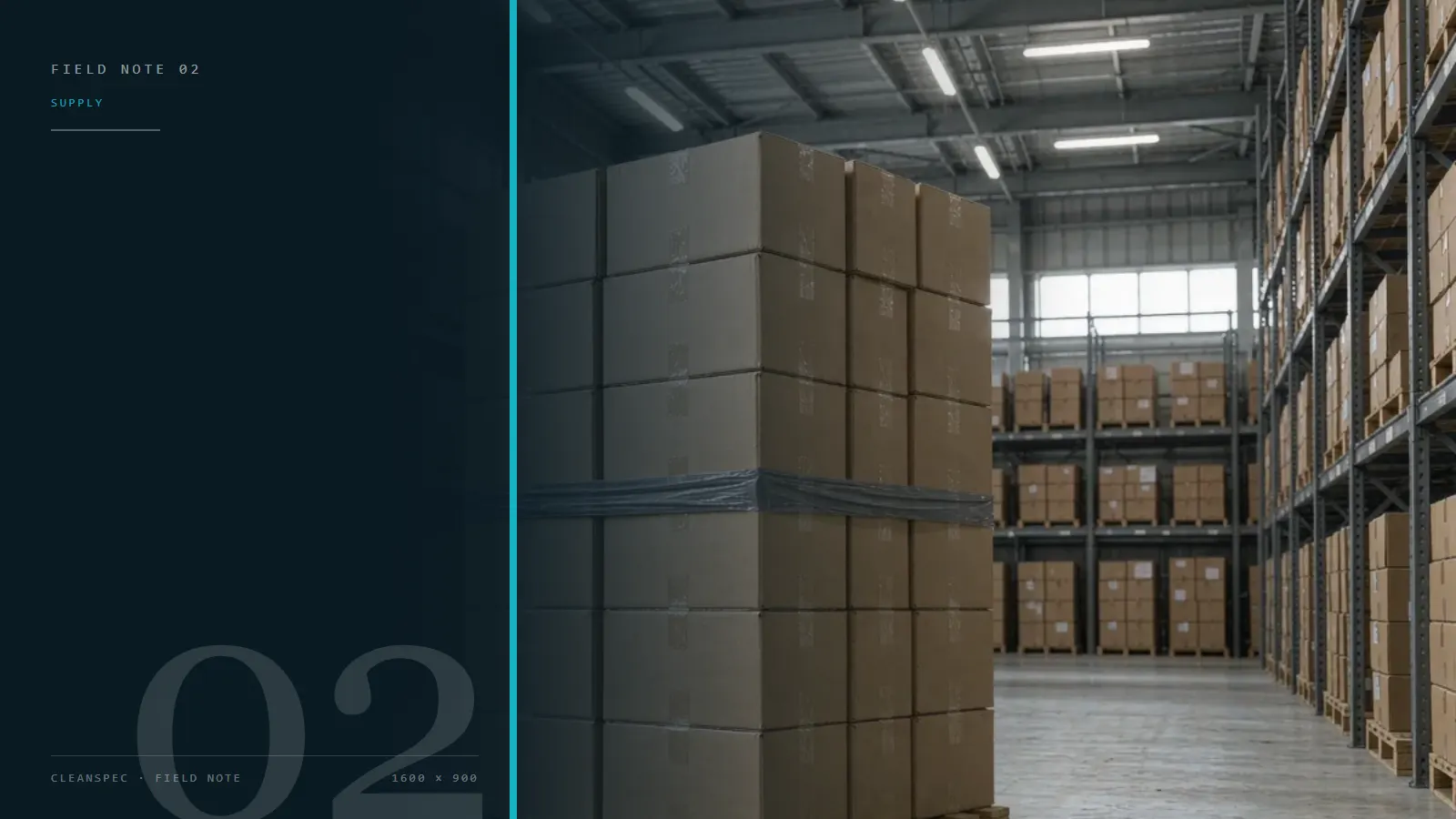
"Manufacturer" is the most overused word in this category. Brand owners use it, converters use it, and traders use it, and from the outside the three look identical: a website, a catalogue, a carton with a name on it. The difference matters at exactly the wrong moment — when a specification has to change, when a lot fails, or when an auditor asks who made the product and on which line.
This note sets out what the word should let you verify, and the questions that separate a manufacturer from a reseller in about fifteen minutes.
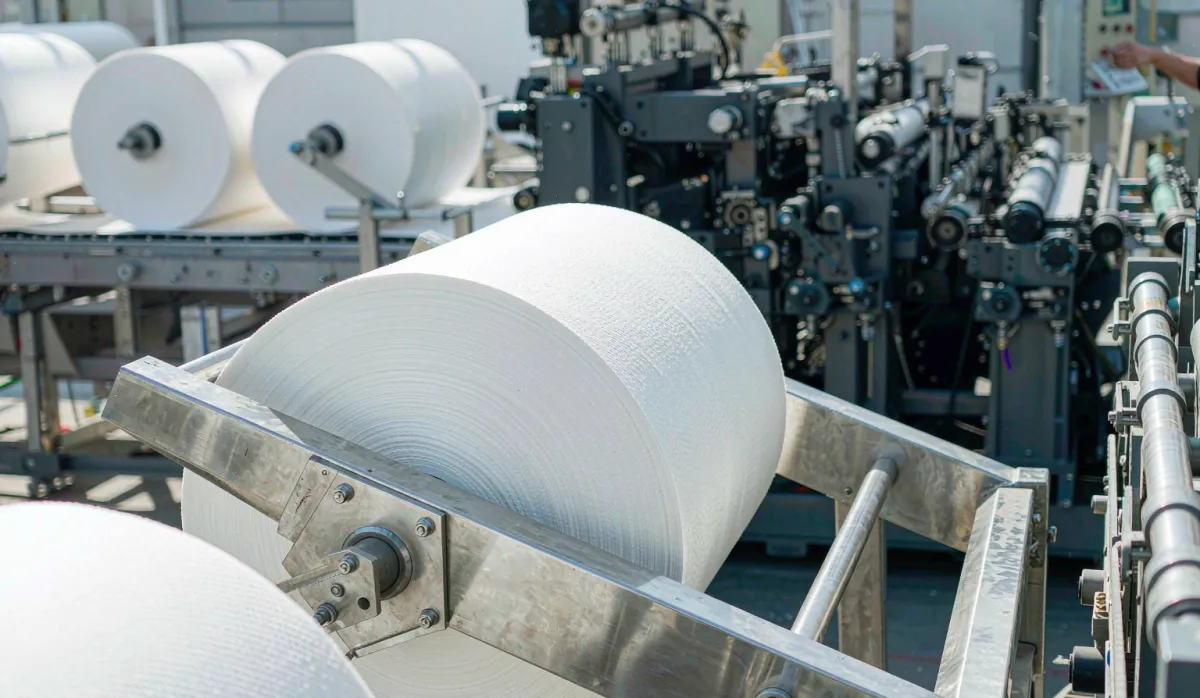
Three supplier types that all call themselves manufacturers
| Type | What they own | What they cannot control |
|---|---|---|
| Converter | Purchases nonwoven, slits, folds, seals, packs, releases the lot | The fibre and the nonwoven construction, which come from a sub-tier |
| Brand owner | The specification, the brand, the release criteria | The line itself; may use several converters across regions |
| Trader | The order and the relationship | Everything upstream, unless the factory gives them visibility |
None of the three is automatically better. A brand owner with strict release criteria and a stable converter can be more consistent than a converter selling direct. What matters is that the supplier can tell you which one they are, without hesitation.
What a manufacturing claim should let you verify
- The site. A street address and a site name, not a city. Ours is in Huizhou, and it can be visited.
- The line. Which converting line runs your reference, and what else runs on it. A line that switches between sterile and non-sterile work needs a defined changeover.
- The sub-tier. Who makes the nonwoven, and whether that source is qualified and locked. This is the single most useful question in the whole conversation.
- The sterilisation partner. If the product is sterile, who runs the cycle, and is the release tied to that site.
- Change control. A written process with a notification clause, not a verbal promise.
If two of those five cannot be answered in writing, you are dealing with a sales office rather than a manufacturer, whatever the About page says.
Why the sub-tier matters more than the brand
A cleanroom wipe is a nonwoven, or a knit, converted into a sheet. The particle and fibre behaviour is largely set upstream, at the fibre and bonding stage; converting decides the edge, the fold and the packing. That is why a converter who cannot name their nonwoven source cannot make a meaningful promise about fibre release, however good their own line is.
It also explains a pattern that surprises buyers: two references from different brands, with different prices, behaving almost identically. They often share a sub-tier. The reverse is also true — the same brand can deliver different behaviour from two regions.
Private label: what changes and what does not
In a private-label run, the artwork, pack count and carton change. The construction, the line, the test plan and the release criteria should not. A supplier that quietly re-sources the nonwoven for a private-label order has changed your product without changing your part number, and the first evidence will be a customer complaint.
Minimum runs are usually expressed in packs rather than cases; ours start at 1,000 packs, which is roughly a pallet depending on format. The commercial mechanics are covered in what OEM really costs.
Questions for a factory visit, or a video audit
- Walk from goods-in to dispatch without stopping. Where can clean and dirty material meet?
- Ask to see the changeover record for the line that will run your reference.
- Ask how a lot number on a carton maps back to a production record, then pick a carton and follow it. Lot traceability is either demonstrable or it is a policy document.
- Ask what happens to a lot that fails release, and who signs the deviation.
- Ask to see the certificate of analysis for the last three lots of the reference you are buying. Compare the numbers, not the format.
None of this requires a formal audit. It requires twenty minutes and a supplier willing to walk.
What this means for your specification
A specification written against a manufacturer's own documentation is a specification you can hold someone to. One written against a catalogue photograph is not. The practical version sits in writing a specification suppliers can quote against, and the test methods behind the numbers are set out in IEST-RP-CC004.
Our own document set — specification sheet, certificate of analysis, test report, material declaration and packaging drawing — is described on the quality page. If a supplier cannot match that list, the comparison is not really between products.
Questions that come up before an order
Is a Chinese manufacturer acceptable for Grade A/B supply?
It can be, if the sterile release, barrier stack and change control are documented and the sterilisation partner is named. The country of manufacture is not the release criterion; the validated process and the lot record are.
Do brand owners manufacture anything?
Some own lines, some do not, and many do both depending on the product. The question to ask is not "do you own a factory" but "which site makes this reference, and can I see its release record".
How do I verify a manufacturer without travelling?
Ask for a live video walk-through of the line running your reference, plus the last three certificates of analysis. A recorded walk-through can be staged; a live call with questions is harder to stage.
What is the difference between OEM and private label here?
In this category the terms are used interchangeably: your artwork and pack count, produced on the same lines and to the same release criteria as the stock programme, under your brand.