Supply
Buying Cleanroom Wipes from China: Landed Cost
Why the unit price is the wrong number: Incoterms, freight by volume, duty paperwork, inspection — and the five ways Chinese supply goes wrong.
Buying cleanroom wipes from China is not complicated. Buying them well is, because the number that decides the purchase is not the unit price on the quotation — it is the landed cost per clean square metre, after freight, duty, inspection, financing and the consumption your operators actually achieve.
This note is the arithmetic, in the order it should be done, plus the five ways Chinese supply goes wrong and the cases where it is the wrong decision altogether.
1. Start with the Incoterm, not the unit price
Two quotations for the same reference are not comparable until the Incoterm is the same. EXW, FOB, CIF and DDP move cost and risk between buyer and seller, and the difference on a pallet of wipes is routinely 15–25%.
| Term | You pay | Where the risk sits |
|---|---|---|
| EXW Shenzhen | Everything after the factory gate | With you from collection |
| FOB Shenzhen | Ocean freight, insurance, destination charges | With you once loaded |
| CIF destination | Destination charges, duty, inland | With you once loaded |
| DDP door | Nothing further; duty and clearance included | With the seller until delivery |
For a first order, FOB is usually the cleanest: you see the real freight cost, you control the forwarder, and you learn what the shipment actually weighs. DDP is convenient and opaque; it hides the duty line you will need when volumes grow.
2. The four numbers that decide landed cost
- Goods. Unit price × quantity, at the pack count you actually specified. A 300-sheet carton at a 280-sheet price is not a saving.
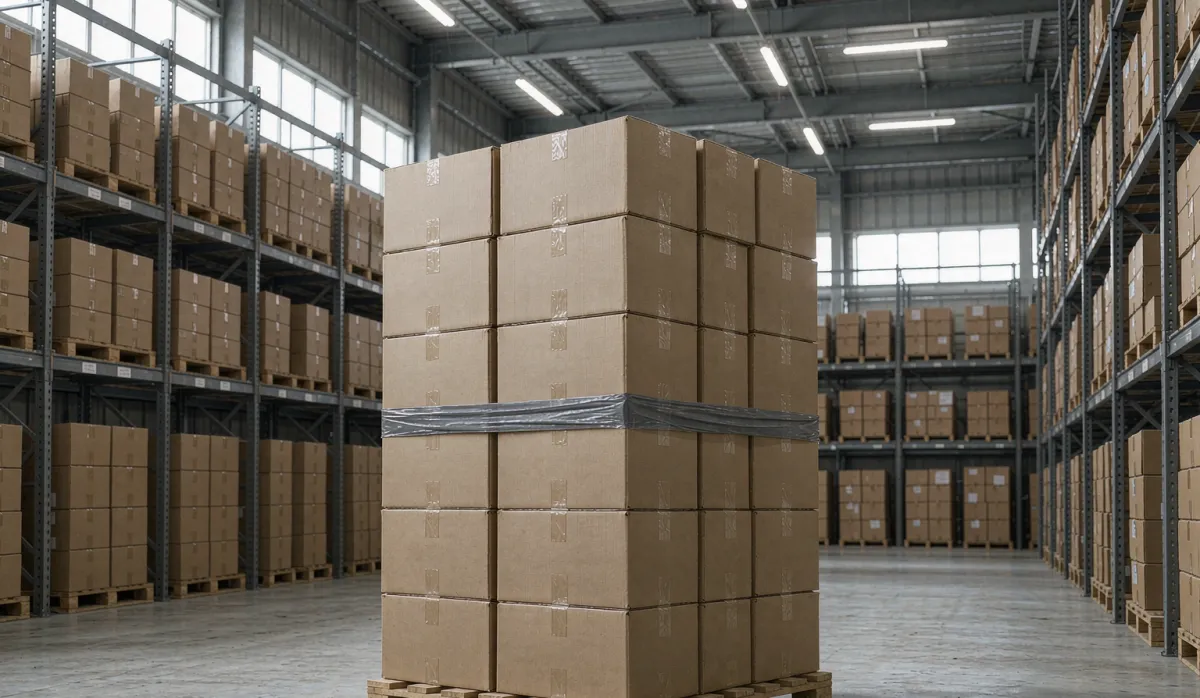
- Freight. Cleanroom wipes are light and bulky, so you pay for volume, not weight. Carton dimensions matter more than carton weight; a 5% reduction in carton height can be worth more than a 5% price cut.
- Duty and tax. Rates depend on origin, material and destination, and they change. Confirm the tariff line with your broker before you commit to a retail price.
- Inspection and financing. Pre-shipment inspection, bank charges, and the working capital tied up in a 30–45 day pipeline. On small orders this is often the largest line after freight.
The comparison that matters is cost per clean square metre, which folds consumption into the same number as price. The method is set out in the arithmetic behind a wipe change.
3. Duty, origin and the paperwork that decides it
Origin is a documentary question. The certificate of origin, the commercial invoice description and the tariff classification have to agree, and the description has to be specific enough to survive a query: "cleaning cloth" invites questions that "nonwoven polyester cleanroom wiper, cut edge, 23 × 23 cm, 150 sheets per pack" does not.
Keep three documents aligned from the first shipment: the specification sheet, the invoice description and the packing list. When they diverge, the delay is at the border, not at the factory.
4. Sampling and pre-shipment inspection
Sample before you order, and inspect before you ship. A pre-shipment inspection on a consumable should check four things: pack count by weight, carton dimensions against the drawing, label content and language, and a physical check of edge and fold on a sample from the middle of the pallet, not the top.
Ask for photographs of the actual pallet, with the lot number visible. A supplier who cannot photograph a pallet has not packed it yet.
5. Where Chinese supply goes wrong
- Specification by photograph. The reference is chosen from an image, the edge and basis weight are never written down, and the second shipment differs from the first.
- Pack count drift. Sheets per pack fall by 5–10% between orders. Weigh a pack against the specification, every lot.
- Label language. The carton arrives with the wrong language or the wrong regulatory statement for the destination, and the goods cannot be received into the warehouse.
- Sterile promises without a barrier stack. Sterility is claimed, but the bag count, the sterilisation method and the release certificate do not line up.
- No change notification. A sub-tier swap ships silently. The only defence is a written clause and a retaining sample per lot.
Each of these is a documentation problem before it is a quality problem, which is why the qualification process in how to qualify a wipes supplier matters more than the price negotiation.
6. When buying from China is the wrong decision
It is the wrong decision when you need stock tomorrow, when your specification is still moving, when the annual volume is under a pallet, or when your customer contract requires a named domestic source. It is also wrong when the total landed saving is under about 12%: below that, the working capital and the pipeline risk usually eat the difference.
Where it is right is where the specification is stable, the volume is predictable, and the supplier can document the lot. That is the case our programme is built for: stock references from 12–18 days ex-works, sterile from 21–30 days, and private label from 1,000 packs. See the wiping cloth range or send the application.
Questions that come up before an order
What Incoterm should a first order use?
FOB. It keeps control of the forwarder with you, shows the real freight cost, and avoids the opacity of DDP pricing on a shipment you have not measured yet.
How much should freight add to the unit price?
For bulky consumables it is commonly 10–20% of goods value by ocean, and considerably more by air. The exact figure depends on carton dimensions and how well the pallet is built, not on weight alone.
Do I need a pre-shipment inspection?
On the first three orders, yes. After that, a lot-based check on arrival plus a retaining sample is usually enough, provided the supplier notifies changes in writing.
Can I get sterile references from China?
Yes, with a named sterilisation partner, a defined barrier stack and a release certificate at SAL 10-6. Ask for the barrier stack drawing before you ask for the price.