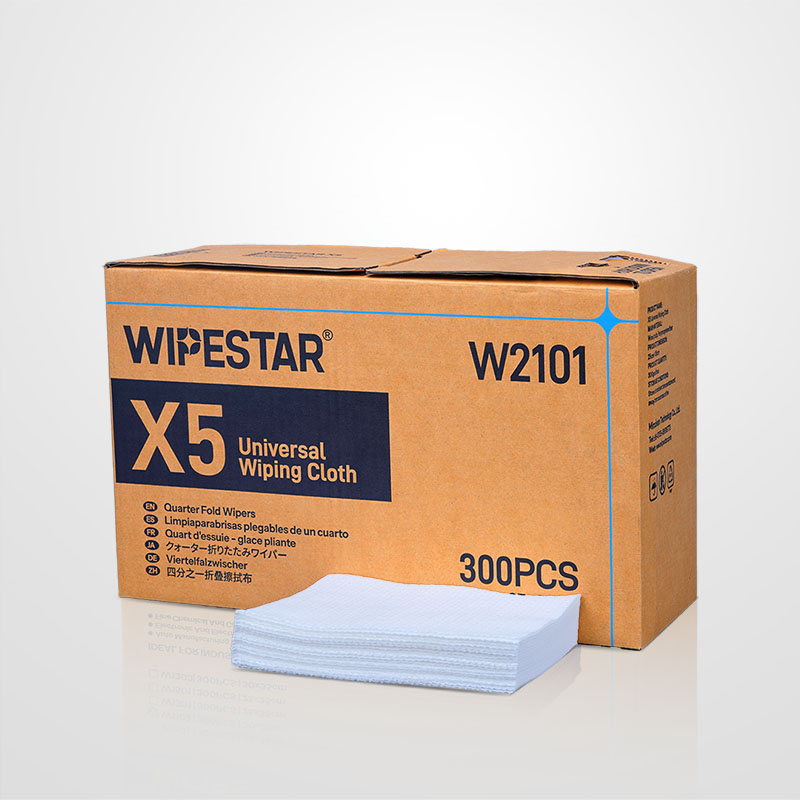
A wood-pulp and polypropylene cloth for general surface work: absorbent, soft enough for painted panels, and stable with IPA and acetone.
Selection note
Start here when the surface is ordinary and the solvent is not. The 25 × 35 cm sheet covers a bench edge in two passes, and the cut edge is acceptable anywhere the room is graded ISO 7 or 8. Buy it in boxes, not cases, until you know the monthly draw.
Construction
The W2101 blends wood pulp for uptake with polypropylene for wet strength. The result is a cloth that holds solvent without collapsing, and releases it under light pressure rather than flooding the surface. The stone-embossed pattern gives a little texture for removing dried residue.
Where it is used
- General wiping in ISO 7 and ISO 8 assembly areas
- Paint and coating preparation on metal and composite panels
- Machine tool, bearing and hydraulic maintenance
- Screen printing and graphic arts cleanup
On the line
On the line, it is the cloth that stays in the hand while the operator reaches for a second one. Buy it by the case once the draw is stable, and keep one box sealed as the reference sample for the next lot.
Release check
Release check: weight per square metre, edge integrity after a solvent soak, fold count against the drawing, and the lot number on the carton. We keep the retaining sample for the shelf life stated on the certificate.
Handling notes
Keep the box closed between uses and store away from solvent vapour. For Grade A/B work, use a sterile or pre-wetted reference instead — cut-edge cloths are not intended for aseptic transfer.